Stop Leading With the Total Price: Here's What to Say Instead
You walk the homeowner through the scope. You explain what you’ll do, how long it’ll take, what materials you’ll use. They’re nodding. They’re engaged. Then you say the number.
Their face changes.
It’s not that your price is wrong. It’s that $35,000 hits differently when it lands all at once. Homeowners finance their phones, their cars, their furniture — all in monthly payments. Then a contractor drops a lump sum on the kitchen table, and suddenly the project they were excited about feels like a financial cliff.
In 2025, 54% of homeowners financed their renovations through home equity loans or lines of credit. They’re already thinking in monthly payments. The disconnect is in how contractors present the number.
Ronald Prevost, a licensed mold remediation contractor in the Gulf South who runs Mold Shield Restoration, recently overhauled his pricing presentation after watching his close rate slide as costs climbed. “I used to just lead out with the full here’s the number, bam,” he says. The changes that turned it around apply to any trade.
1. Lead with what they’re getting, not what it costs
The instinct is to get to the price fast. But dropping a total before you’ve established what the homeowner gains creates what Prevost calls “a shock moment,” even when they already expect a big number.
Start with the problem they came to you to solve. A rotting subfloor means potential mold. An outdated electrical panel means fire risk. A cramped kitchen layout means a home that doesn’t function for their family. When homeowners understand the stakes, the investment feels proportional.
Then connect the price to specific outcomes. The most important outcomes homeowners cite from remodeling are improved functionality and livability (28%), durable results (23%), and better aesthetics (23%). Those are the benefits that should frame your price, not the other way around.
“Easing them into the number is a lot better than just hitting them with a number,” Prevost says. “Give them the benefits, what they’re going to get out of it, and then present the price.”
Your move: Before your next estimate, identify the three biggest benefits the homeowner gets from the project. Lead the conversation there before any dollar figure comes up. When the price does land, it should feel like the cost of something valuable, not a number in a vacuum.
2. Break the total into smaller numbers
A $35,000 kitchen remodel is intimidating. A $175-per-square-foot kitchen remodel is the same project, but it registers differently. A $425 monthly payment makes it feel like something they can budget for.
Per-unit pricing gives homeowners a reference point. Square footage, per-room, or per-fixture pricing lets homeowners compare and process the cost in manageable pieces rather than confronting a single large number. Prevost made this shift deliberately: “I talk more in terms of square footage prices because that number is a lot less shocking than here’s the total,” he says.
Monthly payments reframe the decision entirely. A $35,000 project financed over 10 years at 8% is roughly $425 a month. That’s a car payment, not a second mortgage. When you present both the total and the monthly payment, homeowners can process the decision in the framework they already use for every other major purchase.
Your move: For your next three estimates, present the price in at least two formats: the project total and a smaller unit — per square foot, per room, or a monthly payment through financing. Watch how the conversation shifts when the homeowner has a number they can anchor on.
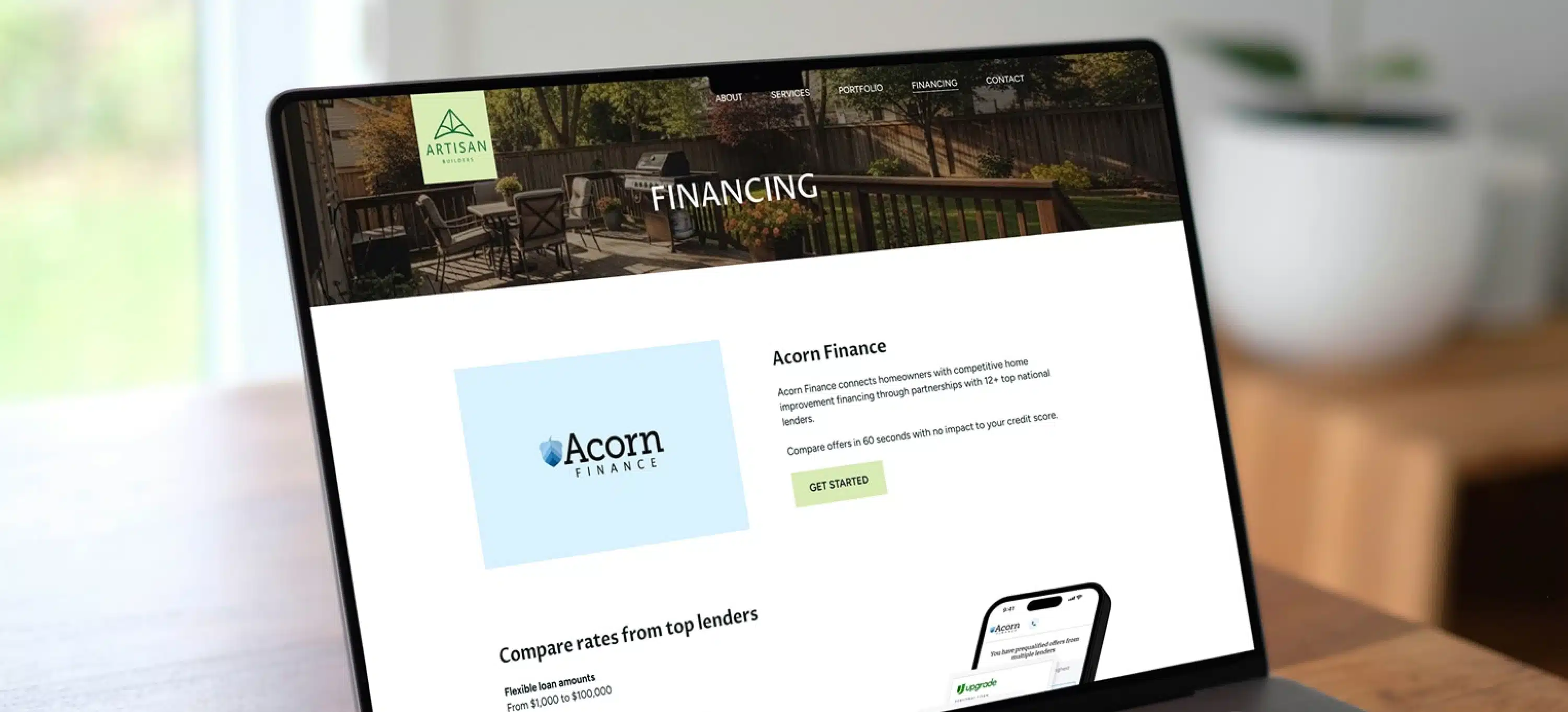
Acorn Finance makes the monthly payment option easy. Your customers compare real loan offers in minutes, so you can show them what the project costs per month instead of dropping a lump sum that triggers sticker shock. Get started today.
3. Present the quote in person, not over email
Every hour between your estimate and the homeowner’s decision is an hour for doubt to creep in, a competitor to respond, or the project to get deprioritized.
The data is clear on how fast homeowners move. About 60% make their hiring decision within 72 hours, and nearly 40% won’t hire a contractor who doesn’t respond to their initial contact. That urgency applies to how you deliver quotes, too.
Build the quote on site when possible. Mobile estimating apps let you walk the homeowner through scope, pricing, and options in real time. They can ask questions. You can address concerns — especially price concerns — before they harden into objections.
Walk through every quote live. Even for complex projects that need more time, never send a PDF into silence. Present it over the phone or video, talk through what’s included, and handle the reaction in the moment.
“If you just drop a quote or send it to them over email, your close rate is a lot lower,” Prevost says. “You work with them right then, you close a lot more deals.”
Your move: Invest in a mobile quoting tool and commit to presenting every estimate in conversation: on-site, by phone, or by video. If you’re currently emailing quotes and waiting, this single change will likely move your close rate more than anything else on this list.
4. Limit options to two
More choices should mean a better chance of closing. In practice, the opposite happens.
Too many options create decision paralysis. When homeowners face three, four, or five project configurations — each with different materials, timelines, and price points — the easiest decision becomes no decision. “We’ll think about it” is almost always the result of too much information, not too little.
A good-better structure works best. Offer one solid option and one premium option. For each, lead with what the homeowner gets, then the price. That’s enough for a clear comparison without triggering overwhelm.
Prevost learned this the hard way. “I would give them too many options, too much information, too much facts and science,” he says. “When people get confused, they step back. The ‘no’ comes out, or ‘we’re going to think about it’ comes out.”
Your move: Cap your next estimate at two options maximum. If you’re currently presenting three or four tiers, simplify and track whether your close rate improves over 30 days.
5. Handle the “just give me a price” homeowner
Sometimes the homeowner skips the conversation and cuts straight to the number. That usually signals one of two things: they’re comparison-shopping bids, or they’re ready to commit and just want the bottom line.
For the comparison shopper: Offer a per-unit range instead of a lump-sum total. A square-foot or per-room price keeps the conversation going and gives you a chance to differentiate on quality, scope, and warranty. These are the things that actually separate your bid from the low-ball competitor’s.
For the ready buyer: Move fast. If someone already knows what they want and is asking for the price, get them a quote immediately. Don’t slow them down with a lengthy presentation they didn’t ask for.
“I just ask them, ‘You’re comparing bids — if you show me what you got, let me look at it,'” Prevost says. “If they’re insistent, I’ll just give them a square foot price right then.”
Your move: Have a per-unit price ready to go for your most common project types. When a homeowner pushes for a number before you’ve done the full evaluation, lead with a range rather than a total. It keeps the door open.
6. Know your numbers cold
Homeowners can tell when a contractor isn’t sure about the price. Hesitation, hedging, and the need to “go check with somebody” all erode trust instantly. Over 70% of homeowners say they’d pay more for a contractor with a better service reputation, and that reputation starts at the estimate.
Confidence comes from preparation, not personality. Know your materials, your labor costs, and your margins before you walk in the door. The contractor who can explain exactly why a project costs what it costs — without flinching — earns more trust than the one who shows up with a slick pitch.
Skip the scripted closes. Canned phrases designed to pressure homeowners into signing backfire more often than they work. “People despise those things,” Prevost says. “If you’ve been in enough sales meetings, you know exactly what they’re doing.”
Your move: Before every estimate, review your costs so you can speak to the price without hesitation. If your material prices haven’t been updated in six months, they could be off significantly. Update your price list before your next bid.
7. Add financing before the objection
Price objections don’t always mean the homeowner can’t afford the project. They often mean they can’t afford it all at once.
Introduce financing as part of the presentation, not a fallback. When you only bring up financing after the homeowner balks, it feels like a concession. When you include it alongside the total from the start — “The project is $35,000, or about $425 a month with financing” — it becomes part of their decision framework.
Give homeowners real numbers to evaluate. Acorn Finance lets customers compare multiple loan offers in minutes, which means better rates and higher approval odds. When you show actual monthly payment options during the estimate, you shift the decision from “Can I afford this project?” to “Can I handle $425 a month?” That reframe keeps the full scope intact instead of value-engineering the project down to something smaller.
Prevost added financing to his process and saw the results immediately. “I found that that greatly increased our close rate,” he says.
Your move: Add a monthly payment line to every estimate alongside your project total. Sign up with Acorn Finance so you can show real financing options on the spot. One sentence — “Want to see what you’d qualify for?” — can save a deal that’s about to walk.
Start closing more this week
Today: Build a benefits summary for your most common project type: improved function, energy savings, durability, warranty protection. Lead with it before the price at your next estimate.
This week: Set up a mobile quoting tool so you can present estimates on-site. Commit to walking through every quote live with the homeowner instead of emailing it.
This month: Add financing to your estimates. Track your close rate for 30 days and compare it to the previous month.
The bottom line
The project hasn’t changed. The price hasn’t changed. What changes is how the homeowner receives the number.
Lead with benefits. Break the total into smaller units. Present the quote in person. Keep options simple. Show a monthly payment alongside the lump sum. And know your numbers well enough that confidence carries the conversation.
Your close rate is a presentation problem, not a pricing problem. Fix the presentation and more of the deals you’re already earning will close.
Ready to stop losing deals to sticker shock? Acorn Finance lets your customers compare loan offers in minutes, turning a $35,000 project into a monthly payment they can say yes to. See how contractor financing works.